domingo, 5 de diciembre de 2021

The Figure in the Carpet /La figura en el tapiz (Wallpaper)


                                                                           for English, scroll down--

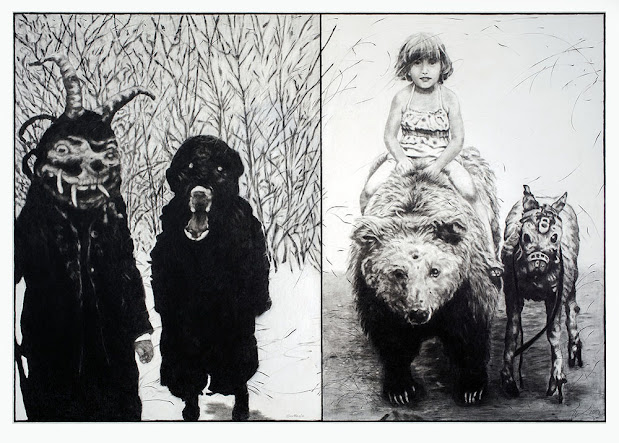
Farnam Street, 1959, graphite/paper / grafito/papel 110 x 170 cm 2020

En 2013 me tocó ser la encargada de decidir qué rescatar de documentos familiares abarcando varias generaciones, incluyendo los archivos de mi padre, fotógrafo por profesión y también por afición. En el proceso reviví mi infancia a través de un sinfín de fotografías, muchas de las cuales veía por primera vez. Me llamó la atención un constante en las escenas de interiores: el papel tapiz. Y así entendí el origen de parte de mi iconografía: las estampas de flores y plantas que prevalecen en la ropa de mis personajes, mientras los fondos de mis cuadros hacen eco de las interiores de mi niñez.

In 2013 I was given the chore of putting in order family documents from various generations, including those of my father, a photographer by profession and by creative compulsion. In the process I relived my childhood by means of an endless assortment of family photographs, many of which I was seeing for the first time. And I realized that wallpaper was a constant in the interior scenes, as it later became a constant in the iconography of my work: floral prints and plants dominate the clothing of my subjects, while the background of my images tend to echo the interiors of my childhood.

Fotos familiares (James Rippey)  principios de los 50, Kansas City (encuadres) / Family photos (James Rippey), early 1950's, Kansas City (cropped)
Susan and Carla Rippey napping, c. 1959, Omaha Nebraska / Susan y Carla Rippey tomando la siesta, c. 1959, Omaha, Nebraska (J. Rippey)

Entonces decidí retomar con más conciencia esas escenas de interiores, tratando de recrear el denso mundo de mis primeras impresiones e interpretaciones de las circunstancias visuales que me tocaban al nacer.
Empecé a trabajar  pensando en el cuento de Henry James llamado The Figure in the Carpet, que describe la búsqueda de una clave, un significado escondido en la obra de un escritor fallecido, que según el propio escritor sería elusivo hasta el momento de encontrarlo, momento en que quedaría manifiesto con extrema claridad el gigante e intrincado patrón que ligara todos los elementos de sus libros. En otro cuento, del cual he perdido la pista, encontré el relato de un niño balanceándose al borde de una alfombra; mientras la examina encantado, imaginando que contiene un mundo infinito, pierde el equilibro y es tragado por ese mundo. Esto a su vez me hace recordar el cuento de Conrad Aiken, Silent Snow, Secret Snow, en que un niño se fascina con las copas de nieve que empieza a ver arremolinándose frente a sus ojos, que con el transcurso del tiempo llegan a obliterar su mundo cotidiano. Al empezar el proyecto, busqué poder sugerir algo de estos misterios y las cruces entre lo real e imaginado en la obra que fuera a resultar del proceso.

So I decided to take up these interior scenes more consciously as subject matter, and try to recreate the dense world of my first impressions and interpretations of the visual circumstances I experienced from birth. I set to work thinking of the Henry James story, The Figure in the Carpet, which describes the search for a key to the elusive significance of the work of a dead writer, which once found would elucidate all of his work, making the whole fall into place as a dense and  intricate interrelated pattern. And I remember another story, now lost, that I read long ago, about a small boy balancing himself on the edge of a carpet, imagining it to be a dense and writhing abyss- into which he suddenly really falls. And this story brings me to another, by Conrad Aiken, Silent Snow, Secret Snow, in which a boy begins to see patterns of snowflakes swirling before his eyes -which eventually consume his entire attention and existence.  In my project, I was interested in exploring and trying to recreate some of these mysteries and crossings-over between the real and the imaged.

The three Rippey girls, Kansas City, 1953 - Encuadres y color virado, C. Rippey / Las niñas Rippey, Kansas City, 1953 Crops and color tones, C. Rippey
Photographs J. Rippey / Fotos J. Rippey 

Me interesaba adentrarme en la reinvención de la cotidianidad por los muy jóvenes, en la posibilidad de sumergirse en esta reinvención hasta perderse, y a la vez esperaba explorer visualmente ese mundo turbio que a veces compete con lo que consideramos real. Con ese fin, trabajé de dos archivos relacionados con la experiencia infantil. Un archivo fue formado por las fotografías de mi padre, escenas de mi propia infancia, donde el hilo conductor no es tanto nosotras las niñas en sí, pero el mundo sugerido a nosotras partiendo de las paredes empapeladas con imágenes ambivalentes.

I wanted to steep myself in the re-invention of the everyday by the very young, in the possibility of submerging myself in this re-invention to the point of losing myself, and so explore visually that cloudy world which sometimes competes with what we call real. To that end, I started working with two archives related to childhood experience. One is made up of the photographs by my father, scenes of my own infancy, where my interest is in not so much in us children ourselves, as in the world suggested to us by the walls papered with suggestive images.

Imágenes vintage de tumblr, etc. / Vintage images from tumblr, etc.

El otro archivo da un paso más hacia el imaginario de niñas y niños: consistía en escenas construidas: escenas fantásticas que mezclan lo real (recámaras y niñas) con lo irreal (bosques y bestias).  Se armó con imágenes encontradas en tumblr o fuentes vintage que forman un continuum con las fotografías de interiores de la infancia; evidencian lo imaginado por los niños. El mundo ensoñado aquí se manifiesta de forma más contundente.

The other archive takes a step more toward a child's imagining: it consists in constructed images, fantastic images that merge the real (bedrooms and little girls) with the unreal (strange forests and beasts). It’s made up of images found in tumblr o vintage sources that form a continuum with the photographs of childhood rooms: what the children imagined is manifested. The world of dreams takes on here a visible form.

La camiseta / The undershirt 106 x 147 cm  2018  

Hermanas / Sisters 112 x 85 cm 2019                                         Susu como pájaro / Susu disguised as a bird 112 x 80 cm 2019

Al trabajar, las imágenes empezaron a evolucionar. Las situaciones se volvieron más ambivalentes. La differencia entre los infantes y los animales se volvió menos obvia. La obra empezó a ser sobre la absorción de lo salvaje por lo doméstico o la subversión de lo doméstico por lo salvaje. Estas obras están agrupadas como Criaturas salvajes.

As I worked, the images began to evolve. The situations became more ambivalent. The difference between children and animals was less obvious. The work began to be about wildness being absorbed into domesticity and the subversion of domesticity by wildness. This later works are grouped as Wild Things.


La ventana abierta /The Open Window 114 x 142 cm 2020
La iluminada / Illuminated 75 x 70 cm  2019


Nosotras al anochecer / We three at dusk Libro de artista, transferencia/papel/costura, 23 x 367 cm 2019

Don't look under the bed, No mires debajo de la cama 90 x 87 cm, 2019

Al yuxtaponer imágenes de niños y niñas, disfraces y animales, entré en un terrero que me no había propuesto explorar, pero que tenía sentido que fuera a emerger. Esto es, surgieron temas de lo terrible que somos los humanos para los animales: la piel de osos vuelta disfraz, animales matados y entregados al taxidermista para volverlos sitios para tomar la foto.

Putting together images of children and animals gave rise to a phenomenon I hadn't foreseen or planned on exploring, although it made sense that it should emerge. That is, themes came up of how disastrous we humans are for animals: their skins are made into disguises, they're killed and stuffed in order to provide sites for taking photographs.

Bestiario / Bestiary  98 x 137 cm 2019

E inventamos todo tipo de situación utilizando sus pieles, sus imágenes y su poder totémico -para no entrar en los casos en que los infantes son presentados con criaturas siniestras con la idea de divertirlos.

And we invent every sort of situation using their skins, their images and their totemic power -and I won't even go into the recurrent cases of children presented with sinister creatures that are supposed to amuse them.

Conejos malditos y otras criaturas / Bad Rabbits and Other Creatures 75 x 86 cm 2020

 Así es que encontré que había caído en una madriguera de conejo, repleta de posibilidades complejas y oscuras.  Nunca subestimes la imaginación de los infantes, y a dónde te puede llevar.

So I found I had fallen into a rabbit hole of dark and complex possibilities.  Never underestimate the imagination of children or where it might lead you.


lunes, 6 de julio de 2020

Pandemia/Pandemic

                                                                                                                --for English scroll down

Recientemente la curadora Natalia de la Rosa me invitó a participar en un proyecto en Instagram de la organización interdisciplinaria de arte Kadist, contestando unas preguntas ideadas por ella con texto e imágenes. Decidí trabajar con imágenes apropiadas (de otros artistas con crédito y algunas mías).  Resulta que el concepto de Kadist es de poner pura imagen, entonces decidí publicar toda la serie de preguntas y respuestas en este blog. Ojo: Lo escribí en mayo, pensando en lectores fuera de México, entonces a veces doy explicaciones que sobran si eres de aquí. Mayo 2020 es muy distinto a julio 2020, pero sí representa lo que pensaba en mayo... Y aquí está:
                                                                                                                                                       --imagen encontrada/found image

I was recently invited by the curator Natalia de la Rosa to answer some questions related to the Covid-19 pandemic, for an instagram project of the interdisciplinary arts organization Kadist. Natalia posed the questions and I answered them with text and images. I decided to work with appropriated images (by other artists, with credit,  plus some of my own) that could illustrate some aspect of the pandemic. Kadist, it turns out is just using the images, so I decided to make a post out of the complete series of questions and answers. Note: I wrote this in May 2020, very different from July 2020, but this represents what I was thinking 2 months ago,  addressing an international audience that might not know too much about Mexico. And here it is:

Natalia de la Rosa: ¿De qué forma has enfrentado la coyuntura dada a partir de la pandemia actual? ¿Cómo has adaptado o se han visto alteradas tus formas creativas?

--Actualmente estoy en la revisión de mis archivos y el cumplimiento con proyectos becados, por ende estar confinada a mi casa y taller no es problema, aunque he tenido que aplazar proyectos de producción gráfica en talleres profesionales. La coyuntura afectó las actividades de una exposición, en el espacio alternativo “Biquini Wax”, de documentos de mi historia durante el periodo de Los Grupos, en los 70 y 80. Esto fue en el marco del proyecto “Despatriarcalizar los archivos”, cuyo objeto era una examinación crítica, por medio de archivos, de manifestaciones patriarcales en la cultura. Suspendimos la exposición y trasladamos la consideración teórica de la exposición en grupo a un espacio virtual.  En otras épocas me habría afectado mucho más, en los momentos en que dependía de la venta de mi obra para mantener a mi familia, cuando trabajaba de forma colectiva en los 70, o cuando daba clases de gráfica y dirigía una escuela de arte. Es decir, la mayor parte de las mujeres artistas están en situaciones mucho más vulnerables, en que se trastorna la vida por esta coyuntura, y se ven mucho más afectadas. 

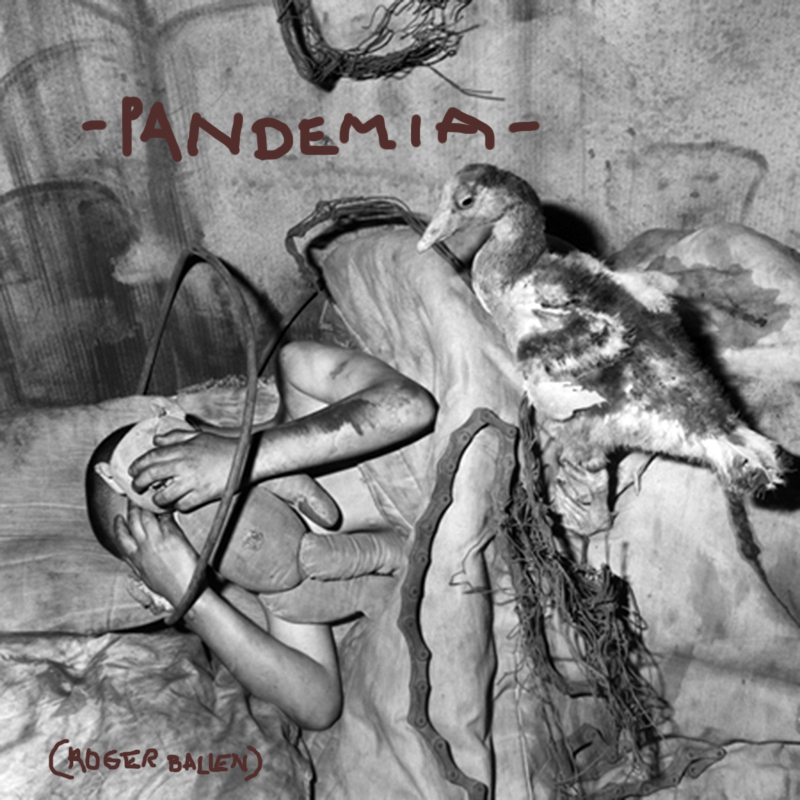
                                                                                                                                                                                               -imagen Roger Ballen

Natalia de la Rosa: How have you dealt with current situation created by the pandemic? How have you adapted or seen altered your creative practices?

 --I’ve been revising my archives and working on grant projects, so being confined to home and studio (same thing actually) isn’t so problematic, although I’ve had to delay some work in graphics studios.
The pandemic did affect an exhibit, in the alternative space Biquini Wax, of my history during the Mexican Groups movement with documents from the seventies and eighties, part of the project "Despatriarcalizar los archivos", whose object is to critically examine through archives patriarchal forms of influence. We suspended the show and moved the theoretical consideration of the project (part of a related course) online. Part of the material in the show is on being shared online.

In other moments of my life I would have been much more affected, say, when I depended on selling my work to support my family, or when I worked in a collective in the 70s, or when I was teaching graphics and running an art school. Which goes to say: most women artists are in situations similar to those just stated, and thus much more subject to having their lives turned upside down by the current situation.


                                                                                                      --imagen Jiri Kölar

Natalia de la Rosa: ¿Qué cambios crees que sean los más significativos en el campo artístico tras este proceso de veloz virtualización y paro de los espacios culturales? En tu caso, ¿has pensado en modificaciones concretas, ya sea de resistencia o en alguna otra estrategia, en comparación con procesos anteriores?


--He visto numerosas iniciativas desde los museos, buscando fortalecer sus actividades virtuales por medio de actividades en línea. Pero la razón de ser de estos espacios es fundamentalmente en el uso y disfrute de los mismos, e imagino que también están dedicando tiempo a pensar la manera de su reapertura. 
Ha coincidido con esta coyuntura una reorganización gubernamental que puso en peligro el funcionamiento, y posiblemente la existencia, del Fondo Nacional de la Cultura, anteriormente un fideicomiso y ahora en proceso de integrarse de otra forma a la estructura institucional. Durante la contingencia ha habido una discusión en línea de un grupo de más de cien creadores buscando velar por la existencia del Fonca y sus importantes funciones de apoyo por medio de becas a los creadores, y por la independencia de las decisiones pertinentes a estos apoyos; hemos logrado un diálogo productivo con la institución. Es probable que se quede activo este grupo como medio de discusión y organización, y de un activismo significativo de parte de actores en la cultura. El grupo también comparte información relevante, por ejemplo este link: https://cuarentenacultural.org/ que reune inciativas relacionadas a la pandemia de México y el mundo.
Tengo que agregar que dada la gravedad de la situación, siento que no estoy haciendo suficiente, y estoy a la búsqueda de otras maneras de ser parte de la solución colectiva.

                                                                                                                                                                 --imagen William Hogarth

Natalia de la Rosa:  What changes do you think are most significant in the art field during this process of rapid virtualization and the suspension of cultural spaces? In your case, have you thought of concrete modifications either of resistance or some other strategy, in comparison with previous processes?


--I’ve seen a lot of initiatives from museums, working to strengthen their virtual presence through activities online. But the fundamental contribution of these spaces is their on-site activity, so I imagine they are dedicating a lot of thought to their eventual process of re-opening. 


On another front, the pandemic crisis has coincided with, or precipitated, a governmental re-organization in Mexico, which initially caused widespread concern for the future of the National Arts Fund (Fonca), a major source of grants and other support systems for the arts community. I’m part of an online discussion group of over a hundred professionals in the arts concerned about this issue; we’ve established a dialogue with the government officials (both women) who are in charge of this institutional transition, looking for ways to work with them in this process. 

It’s probable that this group, one of several working on cultural concerns, will remain active as a means of discussion and significant organization on the part of actors in culture. The group also shares information, for example, this link https://cuarentenacultural.org/, which covers initiatives related to the pandemic in Mexico and other parts of the world.
I must add that given the gravity of the situation created by the pandemic, I really don’t feel like I’m doing enough, and I’m casting about to find ways of doing more.

                                                                                                                                                                     --imagen Christian Holstad

Natalia de la Rosa: Autores como Achille Mbembe o Paul B. Preciado han fijado su atención en las afectaciones subjetivas antes y después de este momento de enfermedad colectiva, ¿de qué manera crees que el retorno a una política extrema de higienización y absoluto control somático afecte o trastoque nuestras propias corporalidades y los espacios que habitamos? ¿Qué modos alternativos de cuidados de lxs cuerpxs (sociales e individuales) y la vida podemos proponer?


                                                                 --imagen Boris Viskin

--En contestar ésta y las demás preguntas la visión que tengo más presente es la de una agudización de la estratificación de la sociedad. En México ya existía un sector privilegiado con acceso y habilidades para comunicación virtual, que ya interactuaba en gran medida en este espacio, y que cuenta con los medios para implementar el aislamiento necesario para bajar el riesgo de contaminación y propagación de la enfermedad. Y también ya existía una población mucho más amplia cuya actividad económica implica estar en la vía pública, cuyas posibilidades y educación no incluyen más interacción con pantallas que la que sea posible desde celulares o viendo la televisión abierta, y con espacios propios demasiado reducidos como para permitir un aislamiento eficaz. 
La aplicación aquí de “una política extrema de higienización y absoluto control somático” tendría que ser muy azarosa, como en el país hay un acceso relativo a condiciones higiénicas en primer lugar y, además, existen disputas fuertes por el poder regionales (tanto desde los estados como desde los carteles). Aquí, quizás, si no exagero, se podría aplicar el concepto de Mbembe de necropolítica, en este caso, una aceptación implícita de la precariedad de grandes sectores de la población y entonces de su sacrifico y la aceptación –fatalista- de ellos mismos de su estado.* 
En la esquina de mi calle (no es un barrio fino) he escuchado los siguientes comentarios: “pos si me llega, me llega...” “es un invento del gobierno, no existe” “ni modo, tengo que trabajar”.  Si se fuera a intentar este tipo de política en México, podría verse como una versión de la distopía del libro “1984”, con un sector vigilado y controlado de la población y otro sector relativamente aislado de este primero, más caótica y sin la posibilidad de acatarse a las condiciones de la contingencia y además, sin aceptarlas.

*El régimen presidencial actual llegó al poder con la promesa de cambiar este crónicamente precario estado de existencia, están, todavía, en eso.

                                                                                                                                         --imagen José Guadalupe Posada

Natalia de la Rosa: Authors such as Achille Mbembe or Paul B. Preciado have fixed their attention on the subjective effects before and after this moment of collective illness; how do you think that resorting to an extreme imposition of hygiene and absolute control of corporal conditions might affect and/or disrupt our own corporality and the spaces we inhabit? What alternative modes of caring for our bodies and our lives (socially and individually) can we propose? 


--While answering this question as well as the others, I have an image present of a sharp increase in social stratification, with disastrous consequences. In Mexico and the world we already had a privileged sector with access to and abilities in virtual communication, a sector that was already interacting extensively online, and that can also count on having the resources to implement the social isolation necessary to lower the risk of contamination and propagation of covid-19.

And there was also already in existence a much larger sector of population for whom economic activity depends on being out in public, whose interaction with screens doesn’t include much more than that possible by means of cell phones and watching network television, and whose commuting and living conditions often don’t allow for efficient isolation and hygiene.
The application here of “an extreme imposition of hygiene and absolute control of corporal conditions” would at best be woefully incomplete, partly for the aforementioned lack of adequate hygienic conditions, and aggravated by the fact that the country is also rife with regional power struggles (state governments, drug cartels, etc.), which would preclude a concerted joint action. So here, if I don’t exaggerate, one could apply the concept of Mbembe of necropolitics, in this case, an implicit acceptance of the precarious nature of existence for large sectors of the population and thus of its eventual sacrifice when under duress, with the fatalistic embrace of their own situation by those affected.*
On my own street corner (not a fancy neighborhood) I’ve heard the following comments: --well, if I get it, I get it… --this corona business is all made up, it doesn’t really exist… --so what am I supposed to do? I have to work to eat… If there were an attempt to apply extreme sanitary measures in Mexico, we could end up with a version of the dystopian novel 1984, with one sector under vigilance and fairly compliant and another larger sector, relatively removed from the first, more chaotic and without the possibility of compliance, and besides, in an attitude of defiance and denial.

*The present presidential regime came to power with the promise to end this chronically precarious state of existence; they still are working on it.    

                                                                                                                                                                                  --imagen Jiri Kölar

Natalia de la Rosa: ¿Qué otras formas de espacio público podemos construir o pensar ante un discurso que lo define como peligroso?


--El espacio público virtual en sí no puede sustituir a los espacios públicos inaccesibles actualmente. Primero, porque el acceso a este espacio virtual, como ya comenté, no es factible para grandes sectores, y segundo, empieza a haber un elemento de hartazgo de lo virtual. 
El espacio virtual se puede fortalecer como un gran complemento a una vida más completa, pero la meta tiene que ser volver a integrarnos a la vida pública en físico. Lo que será interesante es ver hasta qué punto se puede lograr una presencia física espaciada de la población, para reducir el riesgo. Por medio de asistencia en torno al trabajo, alternando con trabajo desde la casa, con la alteración de espacios públicos para permitir más espacio personal, y en el mejor de los casos y más a largo plazo, una ampliación del transporte público para poder funcionar con menos aglomeración y una mayor inversión en programas de vivienda, se podría crear un futuro más vivible. Otro reto sería mejorar la calidad y los espacios de la educación pública.  

                                                                                                                                                                              --imagen Art Connect

Natalia de la Rosa: What other forms of public space could we construct or imagine, when confronted with a discourse that defines that space as dangerous?


--A virtual public space in and of itself can’t substitute the actual public spaces currently inaccessible to us. To start with, large sectors of the population don’t have access to this virtual space, plus the fact that by constant exposure, we are on the way to getting an overload of online living.

Virtual space can be a great complement to life, but the goal must be to get back into our usual exterior, spacious existence. When we go out again, it will be interesting to see to what extent we can (as we must) achieve physical distancing to protect each other. It could be through staggered shifts at work, alternating with home office, plus the adjusting of public venues to allow for more personal space. And if we were able to redesign public transport to be able to function with less agglomeration and invest more in public housing, we would be creating a more viable future. Another challenge is to improve the spaces and quality of public education. 


                                                                        --imagen Salvador Dalí

Natalia de la Rosa: En un momento que llama a la individualización y aislamiento como un quiebre frente a formas de cohesión y movilización social (feminista, transfeminista, indígena, de defensa de la tierra, etc.), ¿cómo responde tu práctica o qué vínculos mantienes con una colectividad concreta? ¿Qué tipo de alianzas o redes pueden existir para contrarrestar este efecto?


--Desde agosto 2019 estoy coordinando un blog de mujeres artistas en sus talleres: https://mujeresartistasenred.blogspot.com/, para fortalecer la presencia de mujeres en el arte y que sirva como referencia para otras artistas y investigadoras.  Esta actividad virtual podría llegar a ser más consultada en el contexto de la tendencia virtual actual (de hecho ya está pasando, y en el último mes las visitas al blog de fuera de México son más numerosas que las nacionales), pero en una primer instancia, han bajado las contribuciones al blog - en la zozobra que sienten las mujeres al ajustarse a sus nuevas circunstancias, sus energías se van a otra parte. El blog sugirió en primer lugar como registro de una exposición de mujeres curada de forma colaborativa. 
Y estoy incluida (pero no soy de las muy activas) en una red de mujeres artistas de muchas edades, pero en su mayoría jóvenes. Ellas han estado muy activas en promover respuestas a la contingencia, cito: hay que “recurrir a visitas a museos online, performances online, cine, charlas virtuales, textos, entrevistas, obras de teatro online, talleres, actividades artísticas para niñas y niños, y una lista aún más amplia de distintas actividades culturales que depende de nuestro trabajo como creadores, realizadores y colaboradores”. 
Están promoviendo “acciones desde la economía social y solidaria como estrategias de supervivencia frente al Covid-19”, como (cito otra vez): “Consumo consciente, local y sostenible, trueque, bancos de tiempo y monedas alternativas, producción para el autoconsumo, compras colectivas vecinales, promoción de la producción de mercancías de primera necesidad, la creación de cooperativas de bienes y servicios y la promoción de una relación directa productor-consumidor, el aprovechamiento de la organización de asociaciones vecinales y de la economía popular y la creación de vínculos virtuales con instituciones, ONGs, iglesias, y universidades, etc.” También se preocupen por cuidarse entre si, compartir recursos y por la problemática de mujeres violentadas. 

                                                                                                                                                                                --imagen CR

De hecho, las mujeres de este grupo fueron instrumentales en la muy exitosa acción de mujeres ausentándose de su trabajo el 9 de marzo, después de una marcha bastante combativa del Día de la Mujer, pero este logro se ha visto opacado por la repentina circunstancia de la confinación de la mayor parte de la población a sus casas por la contingencia.


                                                                                                                                            --imagen Tracy Templeton

Natalia de la Rosa: At a time which calls for individualization and isolation, breaking with forms of cohesion and social mobilization (feminist, transfeminist, indigenous, defense of the earth, etc.), how does your practice, or the connections you maintain with the collective, respond? What kinds of alianzas or networks exist to counter arrest this effect?


Since last August I’ve been coordinating a blog of women artists in their studios: https://mujeresartistasenred.blogspot.com/, to fortify the presence of women in the arts and as a resource for other artists and researchers. This online activity is more liable be consulted in the context of the current virtual upswing (actually this is happening, we’ve a lot more visits since the crisis started, particularly from outside Mexico) but as people started staying home here, the contributions to the blog went down; I think the women who could have participated right then were thrown off-balance by the new circumstances of their lives and were using their energy to adjust. (They are now coming back!) We started the blog in order to register an important women’s show in Mexico, which was curated collaboratively; we wanted to continue with the collaborative effort beyond the immediate show. Once we have entries by all the original artists, we’ll start having each artist already included invite another.

I’m also included  (though I’m not among the very active members) in a group chat with a radical edge which includes women of several generations, but is geared more toward women in their thirties and forties. 
The group has been very active in creating and promoting responses to the pandemic, for instance, I quote from one entry: “We have to make use of and promote visits to museums online, performances online, cinema, virtual talks, texts, interviews, online theater, workshops, art activities for children, and an ample list of different cultural activities that depend on our work as creators and collaborators”.

The group is also promoting actions rooted in social and economic solidarity as survival strategies before Covid-19, such as (and I quote again):
“Local, sustainable and conscious consumption, bartering, time banks and alternative monies, production for self-consumption, neighborhood collective purchases, promotion of the production of primary-need materials, the creation of goods and services and the promotion of a direct producer-consumer relationship, utilization of neighborhood and popular economy organizations, and the creation of virtual links with institutions, NGOs, churches and universities, etc.”
Another area of concern is that of working on ways to address violence against women, plus looking out for each other, and sharing tips and resources. 


                                                                                                                                                                       --imagen Juana Gómez

This group of women was very involved in the extremely successful action of the women’s work strike in Mexico the 9th of March, after a combative march on Women’s Day. Unfortunately the success of the strike has been somewhat eclipsed by the unexpected circumstance of everyone staying home from work…indefinitely. 


                                                                                                                                                                                     --image CR

Natalia de la Rosa: La filósofa transfeminista y activista Sayak Valencia habla de un momento nuevo para las condiciones de la ficción política de la catástrofe, en relación a la tecnología (en términos de un nuevo dominio del algoritmo) ¿Cómo piensas o reflexionas en torno a este proceso, teniendo en cuenta otras formas de ficción, imaginación y creación de relatos?

--Mi proceso siempre se ha basado en la recolección de imágenes (y palabras) que me producen eco, y un trabajo a fondo con estos archivos. Un ensayo sobre TS Eliot que acabo de leer subraya la presencia en su obra de “las técnicas de collage y multivocalidad y su campo de referencia intercultural y globalizado”. Nunca había pensado en Eliot como un precursor, pero me identifico mucho con la forma de trabajar así descrita. Entonces, seguramente en la época actual encontraré ecos que se integrarán a mi obra, pero es un proceso; estoy atenta.

                                                                                                                         --imagen CR

Natalia de la Rosa: The philosopher, transfeminist and activist Sayak Valencia speaks of a new moment for the conditions of the political fiction of catastrophe, in relation to technology (in terms of a new dominion of algorithm). How do you think or reflect on this process, bearing in mind other forms of fiction, imagination and the creation of stories?


My work has always been based on the collection of images (and words) that produce an echo in me, followed by an extensive examination and processing of these elements. An essay I just read about TS Eliot emphasizes the presence in his work of the techniques of collage and multivocality and his intercultural and globalized field of reference. I had never thought of Eliot as an influence on my work, but I identify thoroughly with the process described. Therefore, surely the profound experience of this period of history will influence my work, but I am waiting to find the echoes. Meanwhile, I try to be alert to the possibilities.

                                                                                                                                     --imagen Jean Cocteau

Natalia de la Rosa: Al retomar de nueva cuenta a Sayak Valencia, ¿qué importancia tienen para ti las relaciones inter-generacionales, tomando en cuenta la propia genealogía de arte regional (artistas, teóricxs, críticxs, movimientos), en un momento donde existe una separación entre poblaciones más jóvenes, dado el contexto, con personas de edades mayores, los cuales podemos pensar como cuerpos en resistencia (testigos de luchas políticas del pasado)?


--Estas relaciones son fundamentales. En mis años 40 pasé mucho tiempo con un amigo en sus 70 (un intelectual comunista que en la cárcel había traducido toda la obra de Ezra Pound) y otro amigo en sus 80 (arquitecto y músico, nacido en una familia de judíos rusos en Harbin, Manchuria). Pero ahora yo misma me encuentro en el grupo testigo, de mayor edad; me ha sorprendido que, particularmente en el último año, los jóvenes nos buscado a mi y a otros veteranos de los años 70 y de “Los Grupos” para indagar en esta experiencia y rescatarla. En el proyecto que ya mencioné de Biquini Wax de “Despatriarcalizar el archivo” mi propio pensamiento sobre mi experiencia cambió, bajo  la lupa de su examinación creativa de la misma. 

Durante mi larga presencia en la escuela “La Esmeralda”, siempre estaba en contacto con jóvenes, y con todas las edades que representan los profesores; creo que uno de los grandes atributos de las escuelas de arte es que crean una plataforma en que interactuamos personas en distintas etapas de la vida, de nuestras carreras y hasta de origen social. Esto, siendo que las escuelas gubernamentales casi gratuitas como La Esmeralda sirven a una población muy amplia, y en su mayor parte de un origen social no privilegiado. 
Hay que agregar que mi práctica en la gráfica se expandió mucho a partir de dar clases, por un reto estar a la altura de mis estudiantes, y por la interacción con ellos.

Las mujeres tenemos una gran oportunidad de trabajo y convivencia intergeneracional a través de los grupos feministas y las prácticas colaborativas que los caracterizan. Han habido otras iniciativas que en la práctica se han vuelta bastante intergeneracional, como la de Obrera Centro (donde se compartían herramientas, opiniones, chismes y comidas) y posteriormente en la Escuela de la Paz, pero tenían una precariedad inherente por depender de un espacio físico en una ciudad de rentas altas. De hecho, desde los 70 han habido múltiples proyectos (de exposición y convivencia) de jóvenes en espacios precarios (predios en vías de venderse, por ejemplo), habría que ver cómo se reinventa este fenómeno a futuro, y hasta qué punto se dificulta. 
Hace años cruzó mi camino un poema medieval japonés, escrito, de hecho, durante una plaga, va asÍ: Si lo que es real, no me es real, ¿porque han de ser sueños, mis sueños? 
Ahora que la realidad está en un estado inestable, mutante, a lo menos tenemos más posibilidad de concretar algunos sueños en la realidad que se está gestando…

                                                                                                                                                               --imagen Juana Gómez

Natalia de la Rosa: Returning to Sayak Valencia, what importance do intergenerational relationships have for you, taking into account the genealogy pertinent to regional art (artists, theoreticians, critics, movements), in a moment when a separation exists between younger populations, taken in context, and older people, whom we may consider as entities of resistance (witnesses of political struggles of the past).


These relationships are fundamental. In my early 40s, I spent a lot of time with a friend in his 70s (a die-hard Communist who translated all of Ezra Pound in prison) and a friend in his 80s (an architect and musician, born into a Russian-Jewish family in Harbin, Manchuria). But now that I am myself in the group of witnesses, the older folks, it's gratifying that a fair number of young artists and researchers have turned to me and other survivors of the 70s Grupos phenomenon in Mexico, particularly in the last year, to explore our experiences and to some extent, rescue and reinterpret them. In the example already mentioned, that of "Despatriaricalizar el archivo", my own thinking about my experience changed, under the lens of their creative examination of it.

During all the years I spent in the art school “La Esmeralda”, as a teacher and later directing the school, I was always around young people, as well as teachers of varying ages; I think that one of the great attributes of  the government art schools (we have two in Mexico City) is that they create a platform in which we all interact, people of different ages, in different stages of our careers and also of varying social origins. This last is related to the fact that these schools are nearly free and provide a means of social mobility for many students. I must add that my own work in graphics improved a lot once I started working around my students; it was a challenge I appreciated.
As women we have a lot of opportunities to work and share time with different generations through feminist groups and the collaborative practices that characterize them. I’ve participated in other initiatives that in practice have been quite intergenerational and included men as well, like that of Obrera Centro (where tools, opinions, strategies and food was shared) and later in the temporary communal space Escuela de la Paz, but these projects had the precarious nature inherent to depending on physical space in a city of high rents.
In fact, since the 70s there have been multiple projects (of exhibit and studio space) managed by young artists in temporary spaces (often family properties in the process of being sold); it will be interesting to see how this sort of project fares in the future… 
Years ago I stumbled upon a Japanese medieval poem, written in fact, during a plague, that goes like this: If what is real is not real to me, why must my dreams be dreams?
Now that reality is in a state of flux and mutation, an unreal state, perhaps we have a chance of bringing some of our dreams into the new reality that is being gestated...

                                                                                                                                  --imagen Eugenia Vargas-Pereira


sábado, 11 de mayo de 2019

Artist's books once again/Otra vez: Libros de artista

ARTIST'S BOOKS ONCE AGAIN / OTRA VEZ: LIBROS DE ARTISTA

Volví a meterme en el tema de libros de artista ahora en 2019 por participar en la feria de libros Codex en San Francisco.
In 2019 I participated in the Codex book fair in San Francisco, and so turned my attention to artist's books once more.

Fashion de la serie Inmolación, II, 2019 / Fashion from the series Immolation, II, 2019

Empecé la serie Inmolación hace diez años (el primer libro introduce este blog). Ya contaba desde hace años con un archivo de imágenes de volcanes, jóvenes con molotov,  gente inmolándose: gravitaba hacia estas temas. Como en toda mi obra las imágenes se ordenan por una lógica formal (cómo se mueve el ojo de una escena a otra) y una lógica ilógica, es decir, por motivos que desconozco pero reconozco. Acá, la segunda versión del libro Fashion de esta serie.

I started the series "Immolation" ten years ago (the first book introduces this blog). Due to some natural affinity with volcanoes, young men with molotovs and people burning themselves up, I had been forming an archive of fire images for years before. As in all my work the images begin to organize themselves by a kind of internal logic (for instance, according to how the eye moves from one scene to another),  as well as by an illogical logic, that is, for motives I don't understand, but recognize. Here, the second version of the book "Fashion" from this series.

detalle/"Fashion" 2o versión - detail "Fashion" 2o version


En general estos libros se pueden considerar múltiples en editions abiertas. En la práctica cada uno representa bastante labor y puede ser o único o una de varias versiones.

In general these books can be considered multiples in open editions. In practice, each is labor-intensive and is either unique or one of several versions.


fire archives / archives de fuego

- A DIFFERENT THEME: OTRO TEMA -
NUEVO LIBRO, Y NUEVA VERSIÓN DE UN LIBRO ANTERIOR, DEL PROYECTO DE MIGRACIÓN
A NEW BOOK, AND A NEW VERSION OF AN OLDER BOOK, FROM THE MIGRATION PROJECT

detalle de Cuando mi sangre aún no era mi sangre.../detail of When my blood was not yet my blood...

 Entre los libros que llevé a Codex estaba éste cuyos elementos había juntado hace años cuando trabajaba en el proyecto "Cuando mi sangre aún no era mi sangre..." Un periplo desde la Ciudad de Kansas hasta la Ciudad de México, 1880- 1920. "Upward mobility" consiste en un collage de distintas fotografías de instancias de gente elevada en la Ciudad de México en principios de siglo: caballeros parados en sus sillas en las carreras de caballos, vedettes en una red, gimnastas, y la inauguración de la columna de la Independencia. (Principalmente de la colección Casasola de la Fototeca). Finalmente armé el libro para una exposición en el Museo de la Ciudad con el tema de la historia de la Ciudad de México, en 2017. 

 fotografías utilizadas en "Upward Mobility"- photographs used in "Upward Mobility"

Among the artist's books I took to Codex was one whose elements I put together when I was working in the project "When my blood was not yet my blood": a journey from Kansas City to Mexico City, 1880 - 1920. "Upward Mobility" consists of a collage of different photographs of people in elevated situations around the beginning of the 20th century in Mexico City: gentlemen at the racetracks standing on their chairs, chorus girls on a net, gymnasts, and the inauguration of the Independence Column. (Principally from the Mexican Fototeca's Casasola archives). Finally I put the book together for a show in the Museo de la Ciudad in Mexico City with the theme of the history of the city, in 2017.


Para Codex, también inventé una versión mucha más chica de un libro de artista de 2010, "El palacio", en que una imagen del Palacio de Bellas Artes en construcción, arrugada e intervenida con costura, sale de una cajita  hecha de latón y forrada de papel, con la misma image en la tapa.

For Codex I also made much smaller version of an artist's book from 2010, "The Palace", in which a crumpled and intervened with needlework image of the Palace of Fine Arts under construction is encased in a small papered tin box with the same image in miniature on the cover.


IN THE BEGINNING.../ EN EL PRINCIPIO...

Empecé a hacer collage en Xalapa cerca 1981, utilizando viejos números de Granma, envolturas de cigarillos y dulces, etc. No tuve respuesta en el medio para estos ejercicios (es decir, ni mercado ni entusiasmo) y los guardé hasta 2017-8, cuando se desarrolló un interés en el mundo del arte en coleccionar material vintage de los 70s y 80s. Al mismo tiempo experimentaba yo con con impresiones en transferencia utilizando thinner y el tórculo con revistas usadas con materia prima, con resultados no del todo exitosos. Y probé alterar las páginas de revistas con solvente, como manera de apropiar y subvertir su contenido.

¿Pienso con más esfuerzo o me esfuerzo por no pensar? despintado de revista  -¿Should I think harder or try not to think? magazine intervened with solvent

Cuando se comercializó la fotocopia laser cerca de 1990, empezó mi producción seria de libros de artista: ya tenía una forma de mover una imagen de buena calidad a papeles interesantes o susceptibles de intervención y manejo (nepaleses y japoneses, papel de envoltura, etc). Fue aun un proceso muy laborioso, como cada imagen en su contexto original (libro, periódico, fotografía, etc.) se encuadraba con cinta o una ventana de papel, dejando solamente la parte a escanear visible, y había que calcular el tamaño proyectado de la impresión para poder negociar esto con el encargado de la máquina de escaneo. Claro, ahora en el siglo 21, se resuelve todo en Photoshop y usb. 
Tras los años encuadraba, quemaba, cosía, intervenía con hoja metálica, y estresaba como se me ocurría estos papeles ya transferidos. En parte servía para diferenciar la imagen impresa de la foto original y en arte, la articulaba como una imagen trabajado artesanalmente, con características de palimpsesto, a diferencia de una impresión más tecnológica y limpia.

Cohete, collage 1981 / Rocket, collage 1981

I started making collage in Xalapa around 1981, with old issues of the Cuban newspaper Granma, cigarette and candy wrappings, etc. I had no positive response to these exercises (no market, etc.) and keep them archived away until 2017-18, when the art world became interested in collecting vintage material from 70s and 80s artists.  I also experimented with transfer prints using paint thinner and the printing press, with  old magazines as raw material, with fairly uneven results. And I tried altering magazine pages with solvent, as a form of appropriating and subverting its context. 
When laser photocopies were commercialized around 1990, my production of artist's books began seriously: now I had a way to move a good quality image onto malleable or interesting papers (Nepalese, Japanese, wrapping paper or found items). This was still a very laborious process, as each image was framed with tape or cut paper in its original context (book, photograph, newspaper for example), leaving visible only the part to be scanned, plus the intended size of this fragment in the final photocopy needed to be calculated so as to negotiate the result with the person charged with running the scanner. Of course, now in the 21st century, all of this is solved on Photoshop and a usb. 
Through the years I would crop, burn, crumple, tear, sew upon, intervene with metallic papers and otherwise stress these transferred papers. partly to differentiate the printed image from the original photograph and partly to articulate it as an hand-worked image, with palimpsest characteristics, as opposed to a cleaner, more technological impression. 

Lords of the Wood, 1995 / Una familia - A Family, 1995


detalle, Una familia / detail, A Family


 ESPEJO DEL ALMA / MIRROR OF THE SOUL

Espejo del Alma, detalle / Mirror of the Soul, detail

Mirror of the Soul  2019 version / Espejo del Alma versión 2019

En la ciudad de Xalapa, Veracruz en los años 80s, donde vivía y trabajaba enseñando gráfica, frecuentábamos (mis hijos, mi pareja y yo) varias papelerías que llevaban muchos años en operación y que tenían la costumbre de almacenar en la trastienda toda su mercancía vieja conservando, más o menos, sus precios originales. Aquí podría surtirme de cuadernos antiguos de caligrafía, esquemas italianas de los años 40, libros de contabilidad viejos y toda manera de artefactos de papel que eventualmente encontrarían su destino incorporados a mi obra. Años después en la Ciudad de México, sobre las hojas de un cuaderno viejo sacado de esta acumulación, organicé la serie de figuras sin cara que forman Espejo del alma, basado en en un fragmento de una cita del dramaturgo George Bernard Shaw encontrado en un periódico: "Bernard Shaw dijo una vez: Se emplean los espejos para verse la cara, se emplea el arte para verse el alma".
In the city of Xalapa, Veracruz in the early 80s, where I lived and worked teaching graphics, we (my kids and my partner) frequented several stationery and school-supply stores that had been in operation for many years and whose custom was to shelve all the old merchandise at the back of the store with more or less the original prices. Here I could stock up on old calligraphy books, Italian illustrated charts from the forties, ledgers and all manner of stationery artifacts which eventually would find their way into my work. Years later in Mexico City, on the pages of old notebook from this hoard, I organized the series of faceless figures that make up Mirror of the Soul, based on a fragment of a quote from George Bernard Shaw found in a newspaper: "spirit. Bernard Shaw once said: Mirrors are used to see one's face and art, to see one's soul".

Mirror of the Soul, / Espejo de alma